Hanuman Chalisa — a devotional introduction and original English meaning of the complete traditional Hindi hymn.
The traditional Awadhi verses are presented on the Hindi tab. This English reading guide follows all forty chaupais (couplets) and the opening and closing dohas, explaining their meaning in accessible words. It is not a line-for-line scholarly translation.
Opening dohas: Tulsidas honors his teacher and asks Hanuman for the strength, clarity and wisdom to praise Rama truthfully.
Verses 1–5: Hanuman is praised as an ocean of knowledge, devoted messenger of Rama and protector against misguided thinking. His strength is paired with intelligence and a dignified, courageous appearance.
Verses 6–10: The hymn remembers Hanuman's connection to Shiva, his great ability, eagerness to serve Rama and the forms he took while finding Sita, crossing Lanka and overcoming enemies.
Verses 11–15: Hanuman rescues Lakshmana and receives Rama's loving praise. The poet declares that even sages and the guardians of the directions cannot fully describe his virtues.
Verses 16–20: Hanuman assists Sugriva and Vibhishana, crosses the ocean carrying Rama's ring, and makes apparently difficult tasks possible through service and discernment.
Verses 21–25: He guards the doorway of Rama's devotion and is remembered as a source of courage, reassurance and comfort. Traditional lines that speak of illness should be understood as expressions of faith and are not substitutes for medical treatment.
Verses 26–30: The hymn praises steadfast remembrance in times of trouble, service to Rama, protection of good people and the lasting reputation of Hanuman's deeds.
Verses 31–35: Sita's blessing, extraordinary powers, and the devotion by which followers remember Rama are celebrated. The hymn invites the reader to live in faithful service.
Verses 36–40: The closing verses ask Hanuman to relieve suffering and guide the devotee like a teacher. Tulsidas concludes by asking for Hanuman's presence in his own heart.
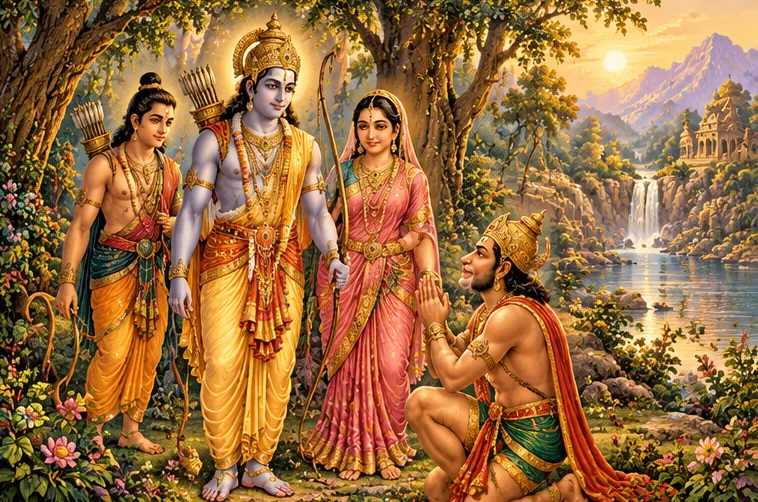
Closing doha: The poet asks Hanuman, along with Rama, Lakshmana and Sita, to dwell in the heart and bring auspiciousness.
Recite patiently, with respect for your family's tradition. If you want precise pronunciation, consult a trusted reciter or critical edition. The classical devotional work is historically attributed to Tulsidas, while this English explanation was written independently for Lavora Bhagti.